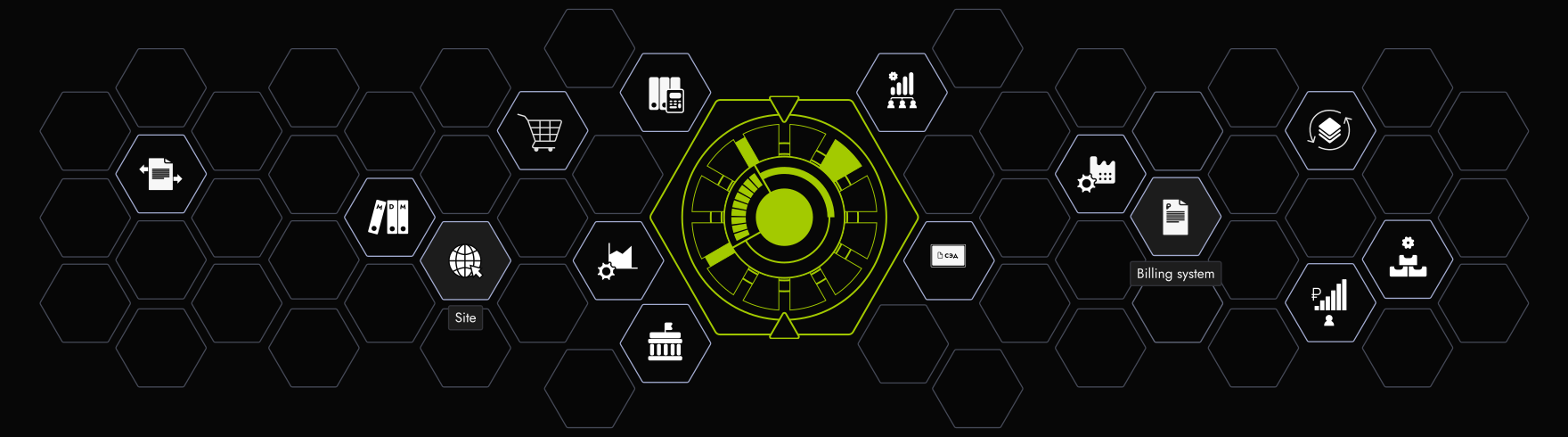
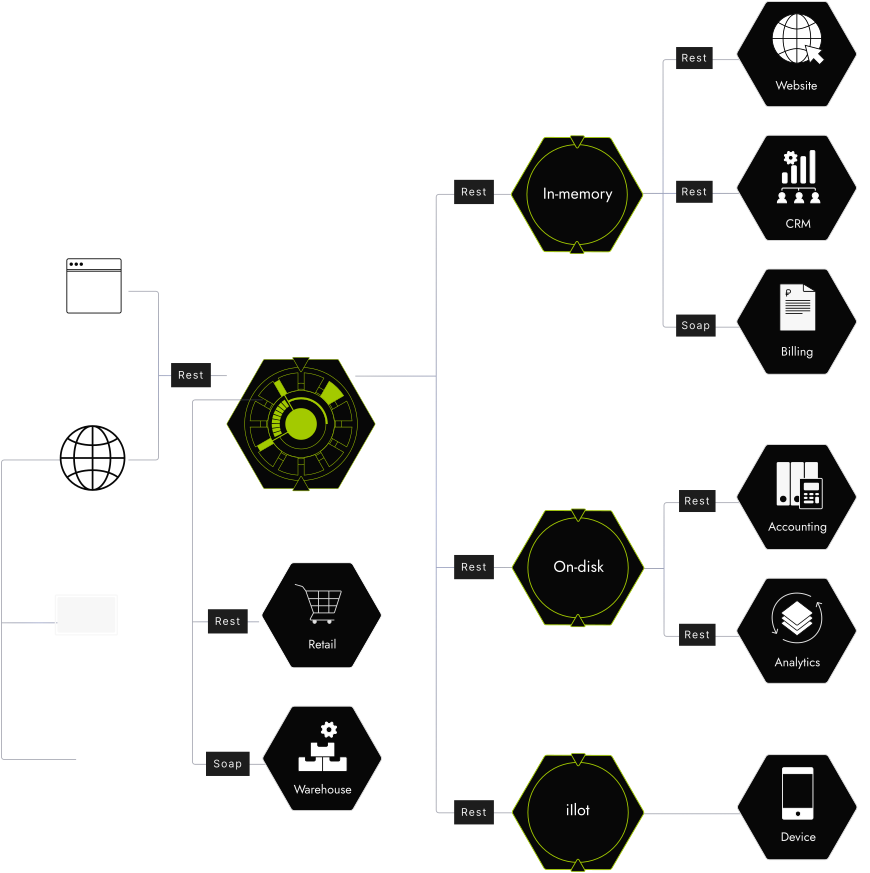
The USEBUS integration platform is middleware that enables integration of systems and services in heterogenous IT landscapes used by government and commercial organizations. It facilitates the transformation, enrichment, and delivery of data across different IT systems.
As an integration platform, the application is an extensible solution that frees users from vendor dependency
Serves as a single integration point
Simplifies their interaction with guaranteed message delivery in the required order.
Used as an ESB
Enables static and dynamic message routing, as well as synchronous and asynchronous interactions between interconnected systems.
A comprehensive tool for data transformation
Addresses a wide range of integration-related issues, such as data security, tracing, logging, and monitoring
Supports most widely known integration protocols
Acts as an intermediary, transport, and data processor for interacting with even the most exotic and legacy systems
Multi-user integration development environment
Multi-user integration development environment
Visual configuration of integration flows using an enhanced GUI, which serves as a layer on top of various open-source solutions.
Multitenant user interface with access control mechanisms.
Settings for shared use by different user groups and management of specific parts of the flow
Ensuring the Security of Data Storage and Transmission
Ensuring the Security of Data Storage and Transmission
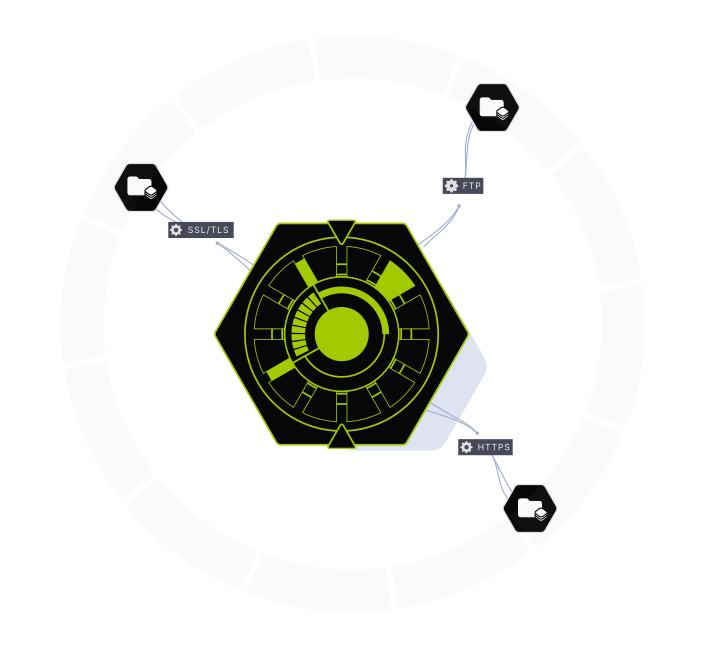
Data storage and transmission security (SSL, SSH, HTTPS) through encryption, ensuring protection against unauthorized access or intentional tampering
Built-in role-based authentication and authorization.
Enterprise-level role-based access model (ORBAC).
Data Collection and Transportation
Data Collection and Transportation
Data collection from various sources, including log files, sensors, and applications in real-time or batch mode.
Synchronous and asynchronous message transmission.
Various process triggering options: by triggers, events within source and target systems, or on a schedule.
Dynamic prioritization of data processing based on current conditions, ensuring fast processing of critical data and optimizing resource utilization for maximum efficiency.
Monitoring and Logging of Data Streams
Monitoring and Logging of Data Streams
Group and batch tracing for visually tracking data changes and debugging integration flows.
Built-in logging system based on the ELK stack, with the option to integrate with other logging subsystems (e.g., Splunk).
Data flow monitoring and issue detection using Prometheus and Grafana to prevent data loss or ensure correct transmission, along with a customizable notification mechanism.
Integration with other monitoring subsystems for comprehensive tracking and analysis.
Optimization and Management of Data Streams
Optimization and Management of Data Streams
Dynamic prioritization of data processing based on current conditions, ensuring fast processing of critical data and optimizing resource utilization for maximum efficiency.
Built-in mechanisms for automatic detection, logging, correction, reprocessing, or routing of problematic data into specialized queues for analysis and resolution.
Built-in mechanisms for automatic detection, logging, correction, reprocessing, or routing of problematic data into specialized queues for analysis and resolution.
Ensuring reliability and high-speed data processing
Ensuring reliability and high-speed data processing
Configurable data persistence to achieve the required level of reliability and processing speed.
Asynchronous interactions ensure high throughput and natural buffering of data under fluctuating flow rates and packet frequencies.
Various caching options for frequently requested data: persistent cache and in-memory cache for integrating with “slow” systems and latency-sensitive applications.
Data parallelization using multithreading to efficiently distribute the load across clusters and provide high performance when handling large data volumes.
Administration and scalability
Administration and scalability
Data flow migration between environments
Support for different deployment modes: non-fault-tolerant (for development), fault-tolerant (for test, pre-production, and production environments), and fault-tolerant with geo-redundancy and replication (for mission-critical tasks and data).
Clustering with geo-redundancy and data processing capabilities.
Component extensibility without violating the License.
Data enrichment and transformation
Data enrichment and transformation
Data enrichment by adding additional information (e.g., timestamps, geolocation data, or user identifiers) to improve data quality and the usefulness of its analysis.
Data transformation mechanisms by altering format, structure, or content to optimize data analysis and ensure compatibility with other systems.
Support for transforming all major data formats (JSON, XML, TXT, Avro, etc.).
Data routing to various destinations (e.g., Hadoop, Hive, or Spark) to ensure regulatory data provision for consumers.
Multiplayer Environment for Integration Creation
Visual configuration of integration flows
using an enhanced GUI that serves as an add-on to various
open-source solutions.
Multi-tenant user interface
with access control mechanisms.
Settings for sharing among different user groups
and managing specific parts of the flow.
Ensuring Data Storage and Transmission Security
Authentication and authorization of incoming requests, with the ability
to pass through an access token to the receiving system.
Security of data storage and transmission (SSL, SSH, HTTPS)
through encryption, ensuring protection against unauthorized access or deliberate alteration.
Built-in role-based authentication/authorization.
Corporate-level access control role model ORBAC.
Data Collection and Transportation
Data collection from various sources, including log files,
sensors, and applications in real-time or batch mode.
Synchronous and asynchronous message transmission.
Various options for process triggering: by triggers,
by events within source and receiving systems, or on a schedule.
Support for file exchange integrations based on
the built-in S3 Minio object storage for files up to 50 TB.
Monitoring and Logging of Data Streams
Group and batch tracing for visual tracking of
data changes and debugging of integration flows.
Built-in logging system based on the ELK stack
and the ability to integrate with logging subsystems (e.g., Splunk).
Monitoring of data streams and identification of
potential issues to prevent data loss or ensure correct data transmission
based on Prometheus and Grafana with customizable notification mechanisms.
Integration with other monitoring subsystems is possible.
Optimization and Management of Data Streams
Dynamic prioritization of data processing based on
current conditions, ensuring rapid processing of critical data
and optimizing resource usage for maximum efficiency.
Built-in mechanisms for data compression and
decompression, allowing for reduced volume of transmitted and
stored data, thereby lowering storage and transmission costs.
Built-in mechanisms for automatic detection,
logging, correction, reprocessing, or routing of problematic
data to special queues for analysis and resolution.
Ensuring Reliability and High-Speed Data Processing
Configurable data persistence to achieve the necessary level of
reliability and processing speed.
Asynchronous interaction provides high throughput
and natural data buffering during unstable stream rates and packet arrival frequencies.
Various caching options for frequently requested data:
persistent cache, in-memory cache for integrations with “slow” systems
and those demanding low latency.
Parallel processing of data using multithreading,
allowing for effective load distribution across the cluster
and ensuring high performance when working with large volumes of data.
Administration and Scalability
Movement of data integration flows between environments.
Support for various deployment options:
non-fault-tolerant (for development environments), fault-tolerant
(for testing, pre-production, and production environments),
fault-tolerant with geo-redundancy and replication (for mission-critical tasks and data).
Clustering with the ability for geo-redundancy and data processing.
Extensibility of components without violating licensing agreements.
Data Enrichment and Transformation
Data enrichment by adding additional information
(e.g., timestamps, geolocation data, or user identifiers) to enhance
data quality and analysis usefulness.
Data transformation mechanisms for changing their format,
structure, or content to optimize data analysis and ensure
compatibility with other systems.
Support for transforming all major data formats
(JSON, XML, TXT, Avro, etc.).
Routing data to different destinations (e.g.,
Hadoop, Hive, or Spark) to supply consumers with regulated data.
USEBUS is an easily extensible product
Product strategy: avoiding vendor lock
The application’s architecture allows users to independently develop and expand tools for building integration workflows, incorporate them into the interface, and still maintain the License and Warranty Support.
The application’s architecture allows users to independently develop and expand tools for building integration workflows, incorporate them into the interface, and still maintain the License and Warranty Support.
Programming languages
Used for implementing Low-Code elements for Drug&Drop and scripting data processing
Main internal languages:
Java
Python
Kotlin
Scala
Groovy
Additional languages for script-based data processing:
Jython
JRuby
C++
C#
Rust
Swift
Objective-C
PostgreSQL
Oracle
MS SQL Server
MongoDB
Redis
Kafka
MQTT
RabbitMQ
RActiveMQ Artemis
FTP
SFTP
FTPS
HTTP/HTTPS
SMTP
SMTPPOP3/IMAP
Ability to include external services on the Drag&Drop canvas for extracting and processing data of any complexity using any programming language.
Ability to include external services on the Drag&Drop canvas for extracting and processing data of any complexity using any programming language.
Connectors operate using various protocols
These are components embedded into the application that allow you to either retrieve data from any source or send it to the required destination.
oData
EnterpriseData
S3
JDBC
ODBC
SQL
SQLite
PostgreSQL
Oracle
MS SQL Server
MongoDB
Redis
Kafka
MQTT
RabbitMQ
ActiveMQ Artemis
FTP
SFTP
FTPS
HTTP/HTTPS
SMTP
SMTPPOP3/IMAP
Processors transform data types.
Special processors allow for data type conversions, addition and subtraction operations, file format transformations, extracting necessary data, and much more.
Data Types:
JSON
CSV
XML
HTML
Text
Binary
Syslog
Grok
PDF
EDI
HL7
JPEG
PNG
TIFF
MP3
WAV
MPEG
Base64
Protobuf
Thrift
BSON
SQL data
LDIF
Windows Event logs
NetFlow
SFlow
Email
Tar
Zip
Gzip
Bzip2
WinRAR
Snappy
LZ4
XLS
XLSX
ODS
DOC
RTF
Markdown
Plain
INI
KML
GPX Event logs
ASN.1
SFlow
You can add any languages, connectors or processors without limitations.
Distributed IT landscape with USEBUS?
Easy!
High-speed streams with guaranteed delivery and order
Heavy and less demanding integrations
USEBUS Federation made simple:
Build a distributed system for data collection and processing, including from iIoT devices.
Distribute integrations by SLA and TIER levels across different nodes.
Configure data stream encryption, monitoring, and notifications.
Ensure the required SLA based on the criticality of business processes.
Set up geo-redundancy for nodes requiring the highest TIER level.
Up to 3 times cheaper
the cost of supporting the landscape by being able to split the tier levels to ensure a sufficient SLA level.
Segregate
High-speed streams with guaranteed delivery and order from heavy, less demanding data flows
Deploy lightweight copies
USEBUS can function not only as an intermediary between various systems but also deploy lightweight copies of itself
The speed of delivering new integrations is the speed of business innovation
Convenient management of the CI/CD pipeline for integration delivery in the hands of the administrator
Manage all environments from a unified administrative panel
As an administrator, grant and revoke access rights
Create and move integration flows between environments
Configure monitoring and notifications for each environment
2023
Usebus
Done
The integration platform covers 90% of the requirements for every first-time client. Defining requirements for Usebus 2.0.
Notifications
Adapters
Security
Clustering
Fault tolerance
2024
Usebus 2.0
In progress
New multilingual interface with new features. Defining requirements for Usebus AI-Integration.
New UX | UI
Tracing
Java 21 Virtual Treads
Integration Management Center
2025
Usebus AI-Integration
To do
Multilingual EiPaaS platform with AI support for data filtering and recovery, coding, and documentation
AI UX | UI
Multitenancy
Training and consulting
Customer’s business users
as integration requesters
Data Engineers
as creators of integration flows
System administrators
as co-drivers of smooth operation of integrations and the entire application
monitoring
logging
precedent notices
We’ll tell you and show you:
Features of the USEBUS integration platform
How to Create an Integration Request
Key Aspects of Developing and Debugging Integration Flows
Administration and Maintenance of Integration Flows
System Administration, Operation, and Maintenance of USEBUS
Sign up for a product presentation
USETECH Group is a dynamically developing company
Address: IFZA Business Park: Building A2, DDP Dubai Silicon Oasis, Dubai, UAEenter, 7th floor
Top Companies providing Custom Software Development services in the UAE, Dubai
Silver winner, Globee Awards 2023
Disruptor Company of the Year / Information Technology Software
Gold winner, World Awards Winners 2021
IT Products & Services for Media and Entertainment
Over 60 million users worldwide benefit from the company’s software solutions on a daily basis. USETECH Group has established itself as a leading software development company, recognized for its excellence in creating innovative mobile applications for businesses and government institutions. The company’s achievements have been acknowledged through numerous prestigious international awards, highlighting its commitment to delivering high-quality, cutting-edge technology solutions across various sectors.
We are trusted
USETECH’s clients and partners include leading retail companies, financial institutions, IT and telecom companies, blockchain enterprises, as well as government agencies, leading retail companies, financial institutions, IT and telecom companies, blockchain enterprises, as well as government agencies.